In Imagined Communities, Benedict Anderson argues that nationalism is not a natural entity but a socially constructed “imagined community.” This central idea runs through the entire book. Out of that process, Benedict Anderson argues, have emerged those ‘imagined communities’ we now call ‘nations,’ impersonal aggregations of strangers, dispersed in far-flung settlements, joined together in mutual awareness and common citizenship thanks to their shared activity as a reading public.
( Anderson, 2006, pp. 15-17 )
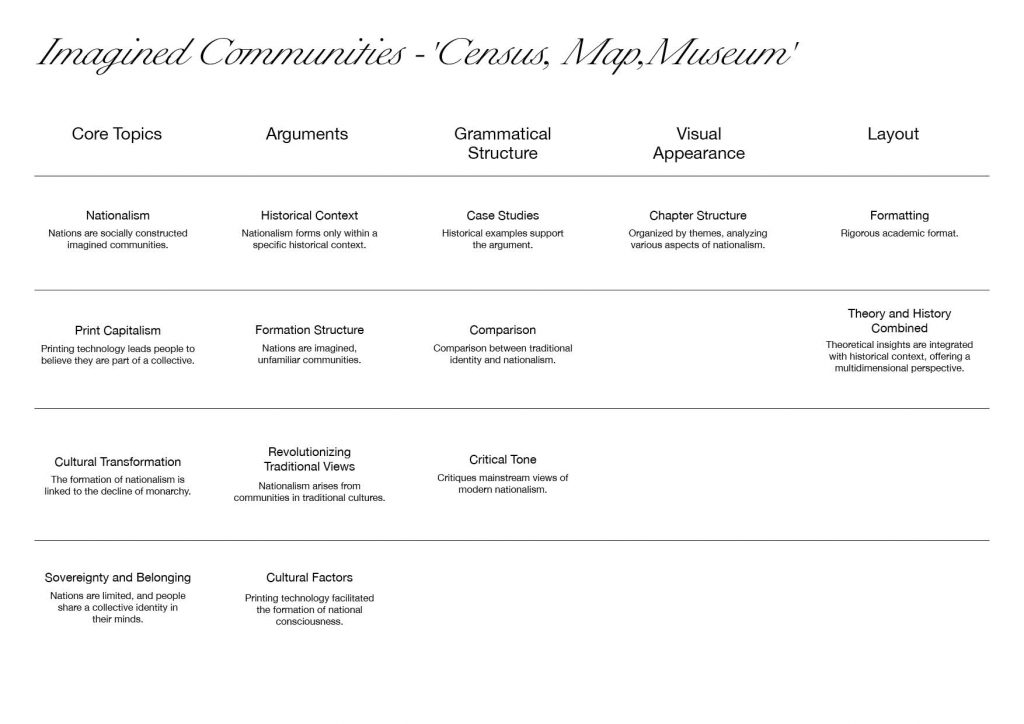
First, Anderson emphasizes that nationalism is an imagined community, where people, although they may never meet most of their fellow members, still share a common identity. Print capitalism plays a key role in this process. With the spread of printing technology, people were able to imagine themselves as part of a larger group through reading the same books, newspapers, and magazines. This made it possible for a collective identity to form across geographic and time boundaries. Moreover, the rise of nationalism is closely related to cultural change, especially the decline of monarchy and religious communities. Anderson argues that as these traditional structures faded, nationalism emerged as a new form of identity, replacing older ways of identifying oneself. In terms of sovereignty and belonging, Anderson points out that even though individuals may never meet all the members of their nation, they still share a collective identity, seeing their nation as a limited and sovereign community.
Next, in the arguments, Anderson explains that nationalism only emerges under specific historical conditions, especially with the rise of print capitalism and modern communication technologies. He argues that nations are imagined communities, which contrasts with traditional religious and monarchical identities. The development of print technology strengthened national consciousness, allowing people to feel connected to others in their nation, even if they did not know them personally.
Anderson’s grammatical structure supports his argument through the use of case studies and comparative analysis. He uses historical examples, especially the rise of print technology and capitalism, to back up his theory. He also compares traditional identities with nationalism, showing how nationalism has replaced or merged with old identity structures. Furthermore, Anderson uses a critical tone throughout the book to challenge traditional views of nationalism, offering a more complex and in-depth explanation.
Regarding visual appearance, Anderson’s book is divided into chapters that focus on different aspects of nationalism. This organization helps readers understand the various dimensions of nationalism. The formatting is structured and academic, with clear divisions between theory and historical context, giving readers a comprehensive understanding of nationalism.
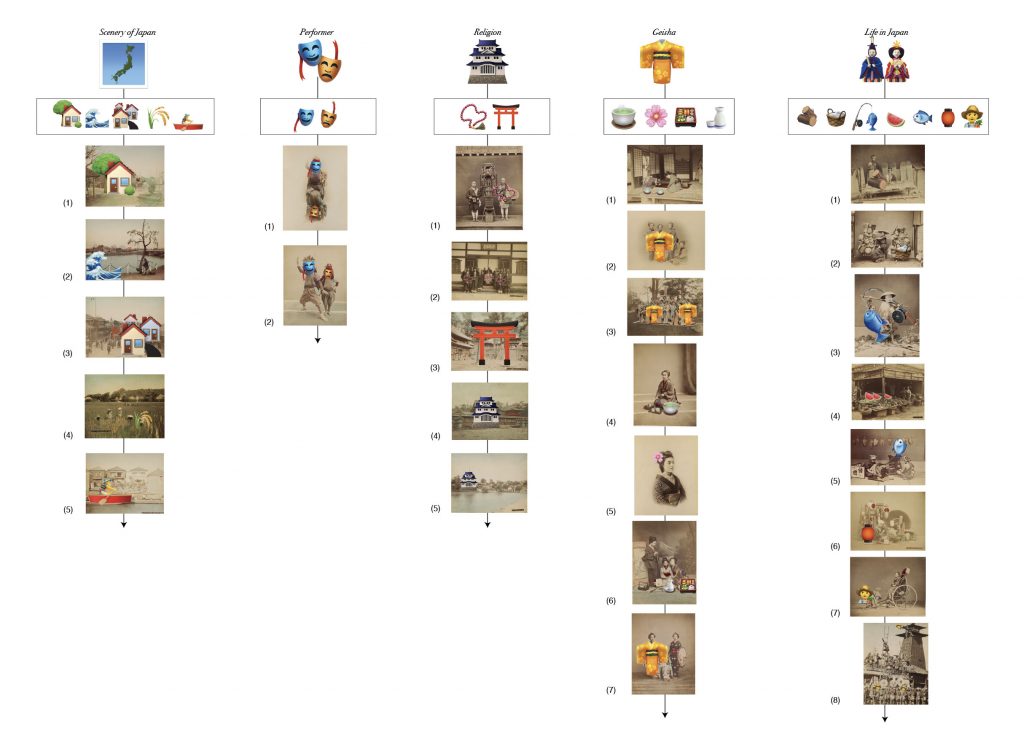
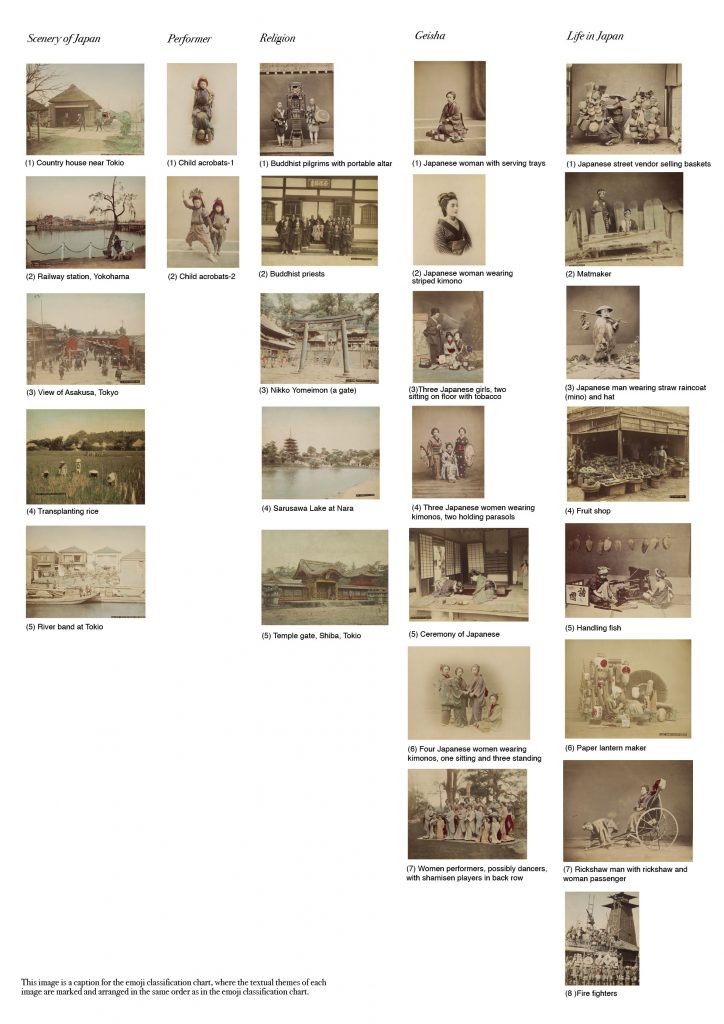
By analyzing the table content, Anderson’s Imagined Communities not only explains the origins and cultural roots of nationalism but also uses historical examples and critical thinking to make the formation and spread of nationalism clearer.
(Words: 444)
Reference list:
Anderson,B. (2006) ‘Census, Map, Museum’, Imagined Communities. Maple Press
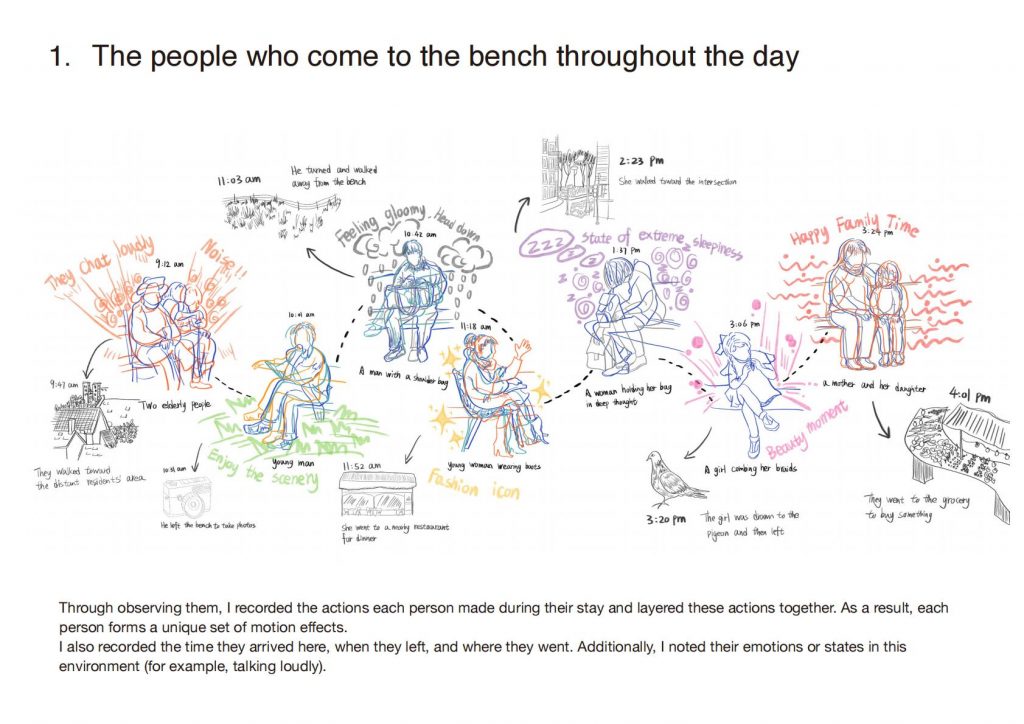
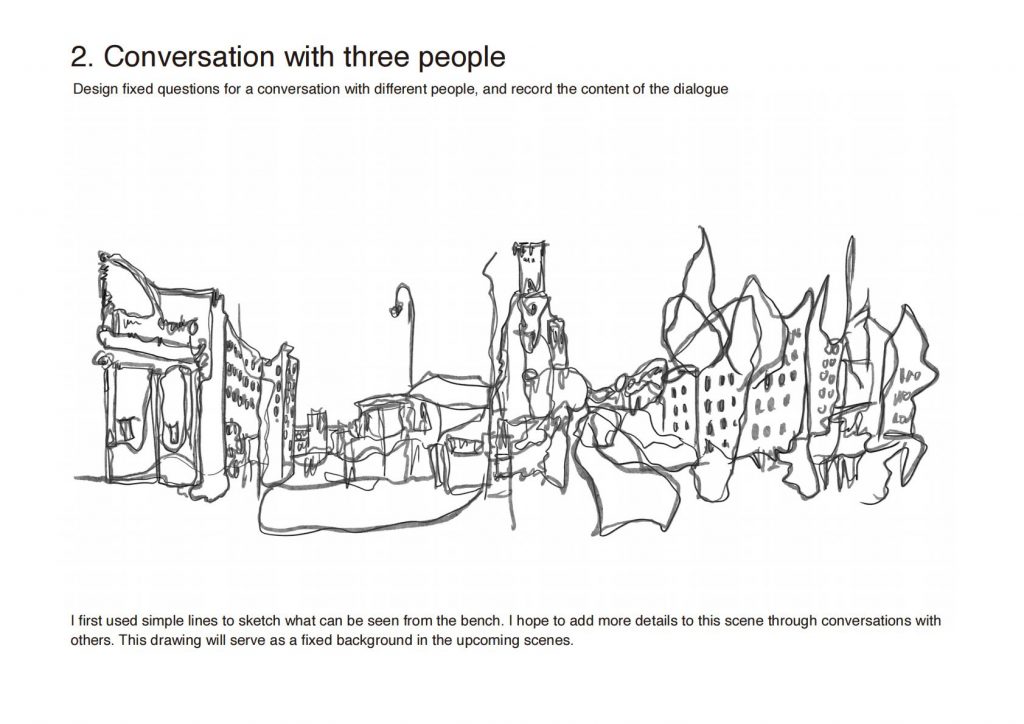
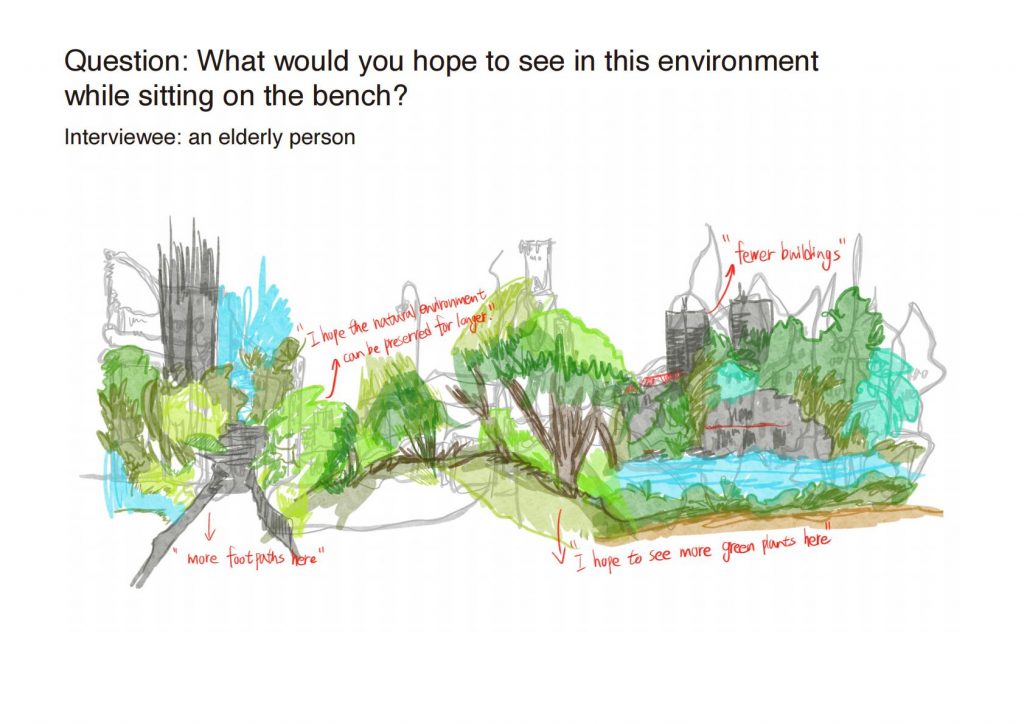
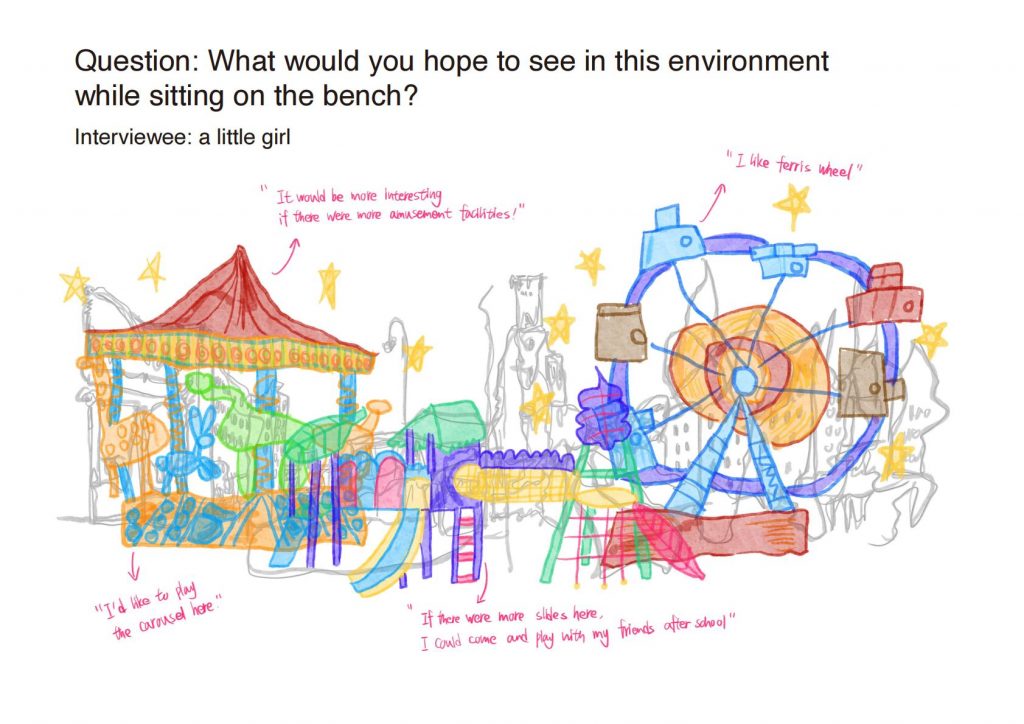
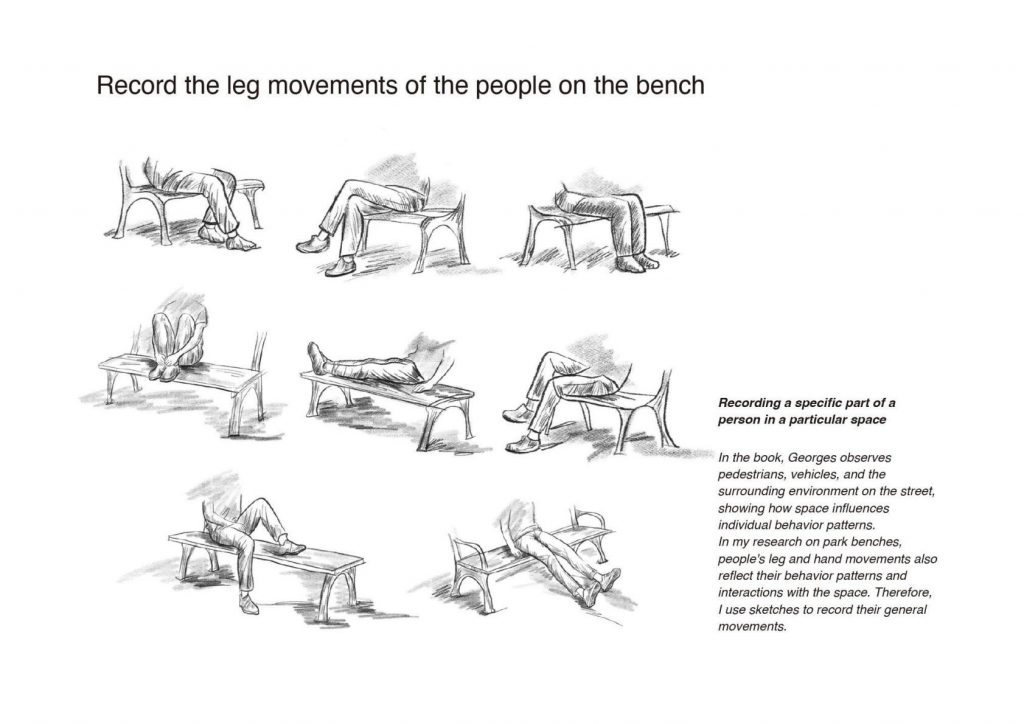
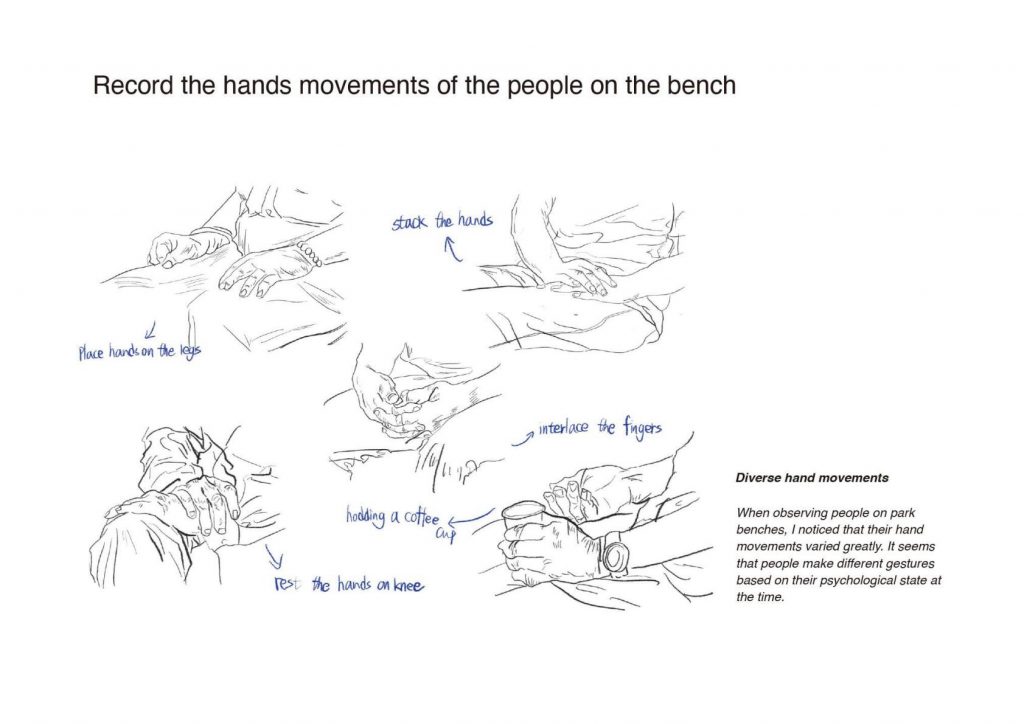
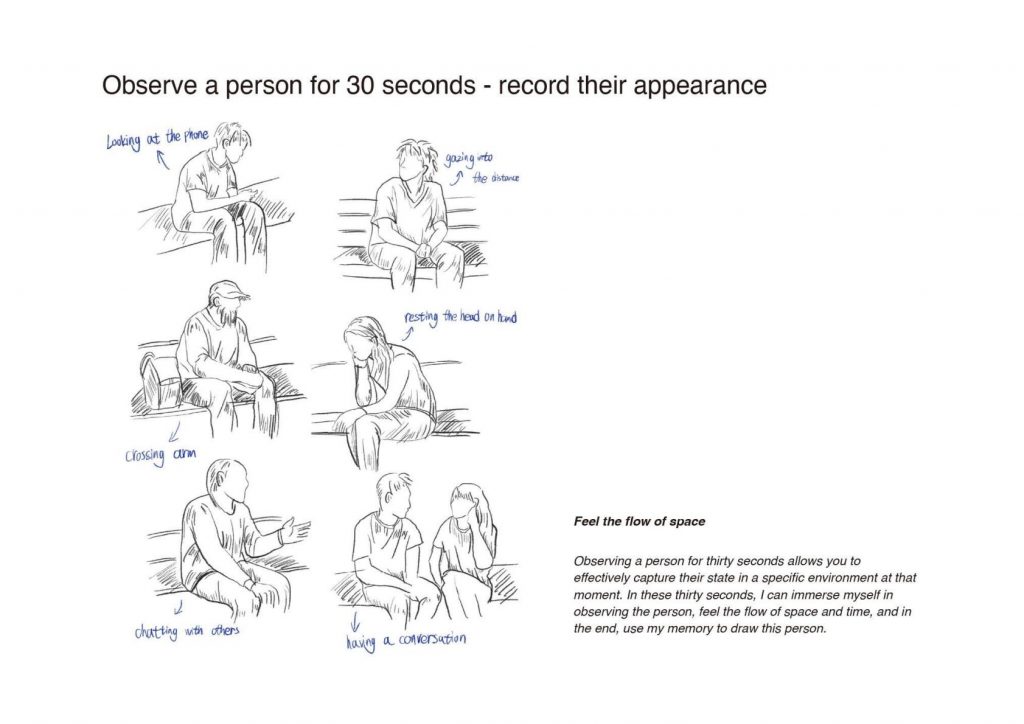
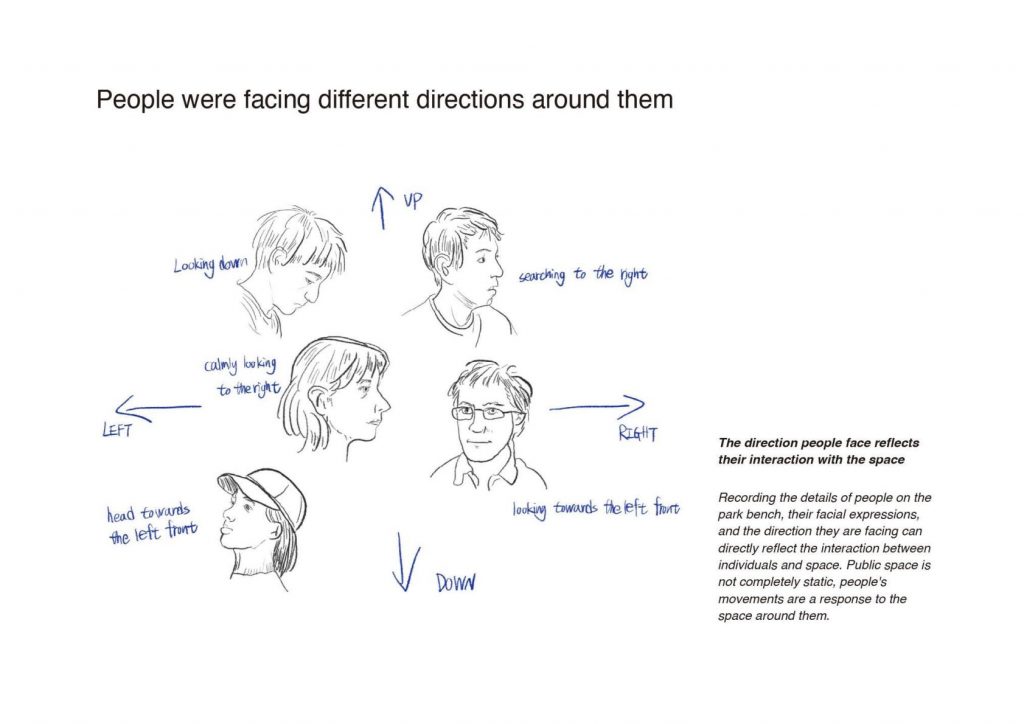
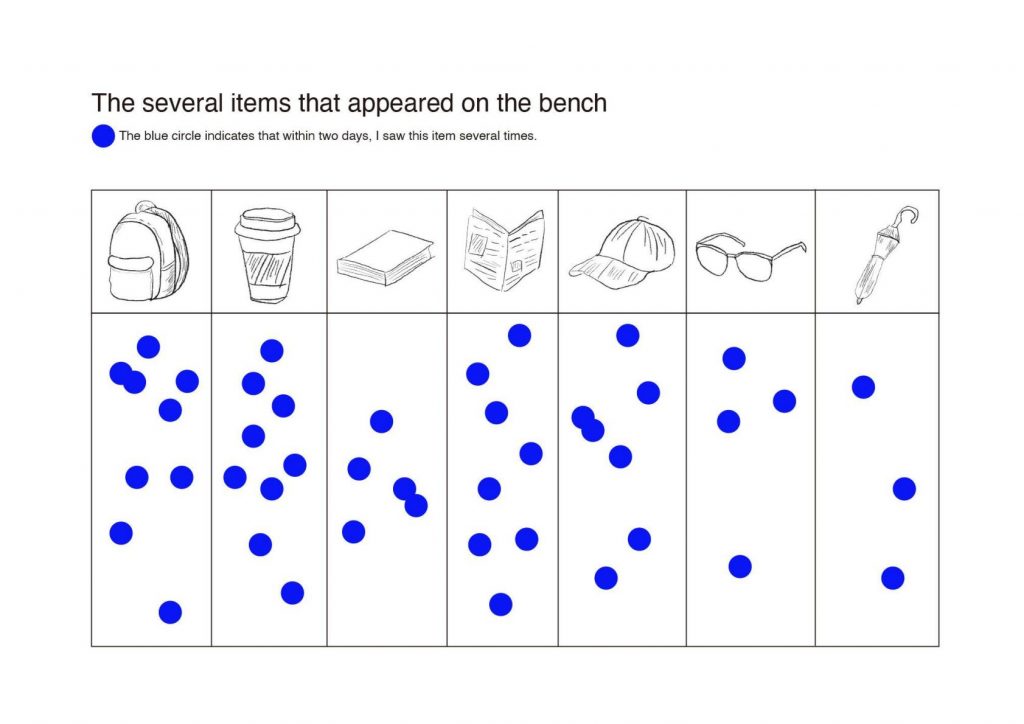
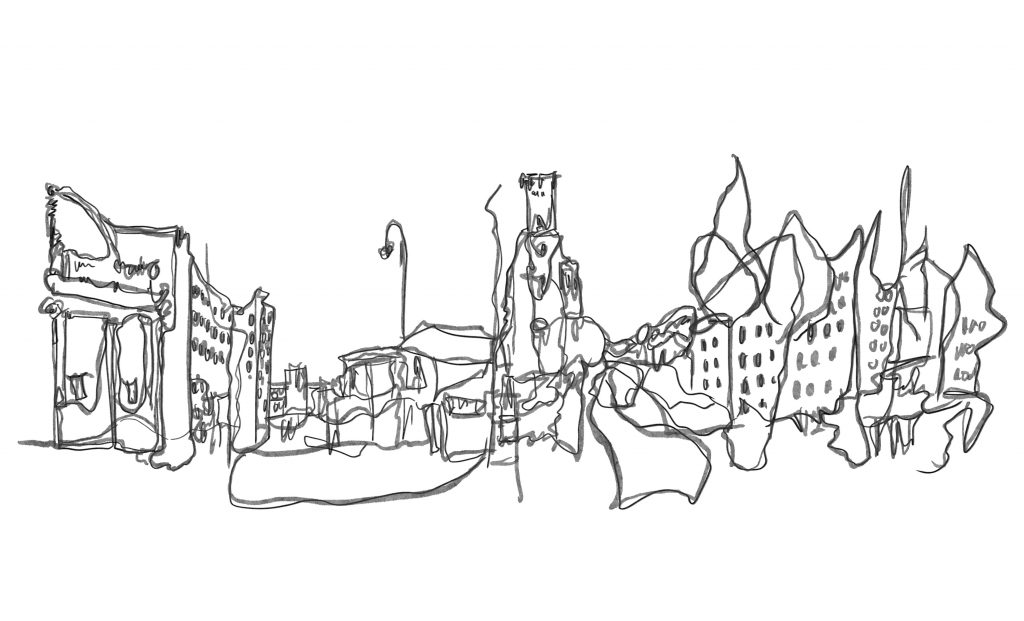
Benches are common elements in society. They not only serve as physical spaces for rest but also carry the interactions between individuals and society. Robert Venturi and other authors believe that modern architecture can achieve the “communication through space” function. They argue that space is not just an independent physical entity, it is also a medium for social behavior, playing a role in conveying social interactions and communication. (Venturi, Brown and Izanour, 1972, pp.8-9) This idea inspired me to explore the role of benches in public spaces. I began to think about how benches facilitate the interaction between the people sitting on them and the surrounding social environment.
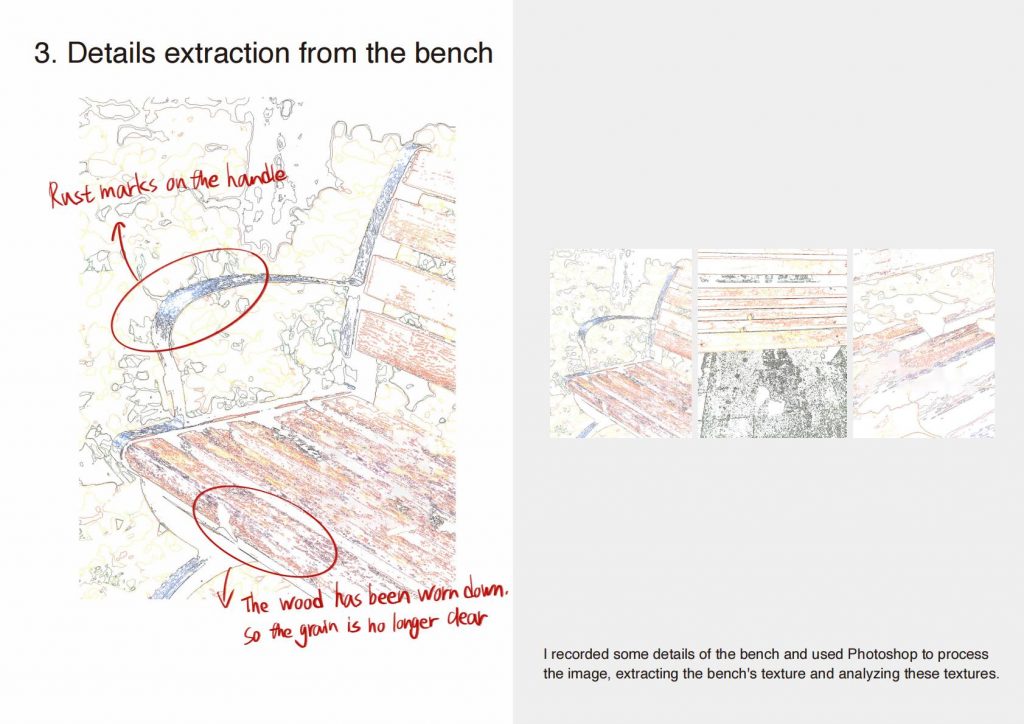
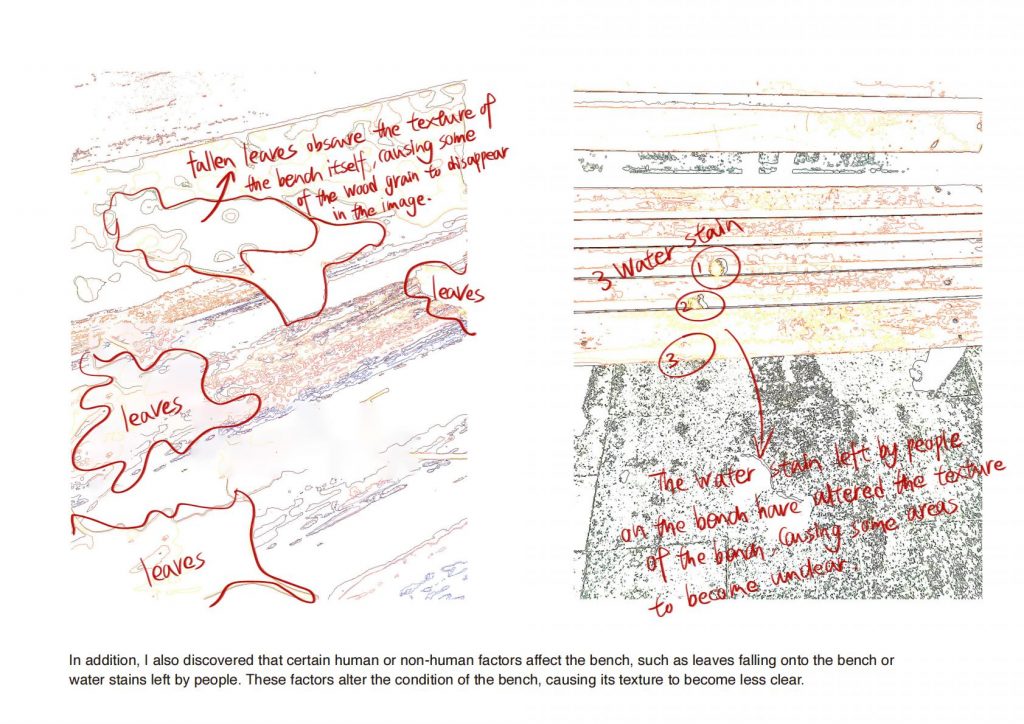
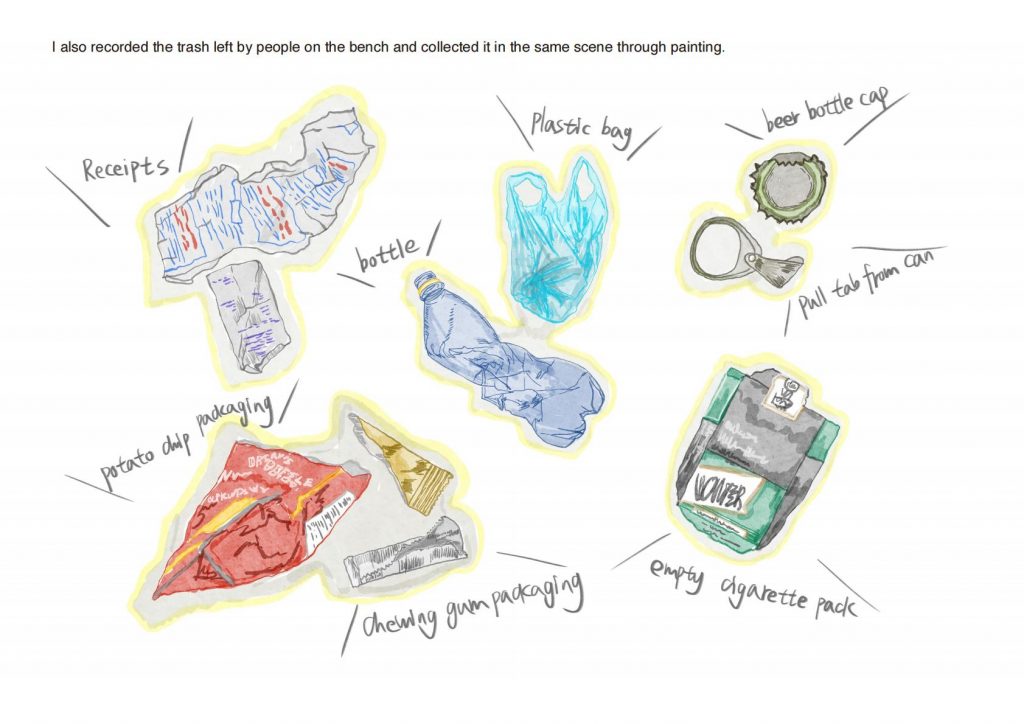
In this process, the methods of observation played an important role in driving my research forward. Georges emphasizes the importance of observing the details of daily life, urging people to slow down and notice seemingly ordinary aspects of life that hold deeper meaning. (1974, p. 50) I chose to use sketching as a method to record the leg positions, hand movements, and head orientations of people sitting on park benches. Through these observations, I tried to capture the small actions of people in this public space. However, I gradually realized that relying on this rational observation method could not fully reveal the complex relationships between people and social interaction. I critically believe that traditional observation methods, while lack a deep understanding of individual emotions and social interactions.
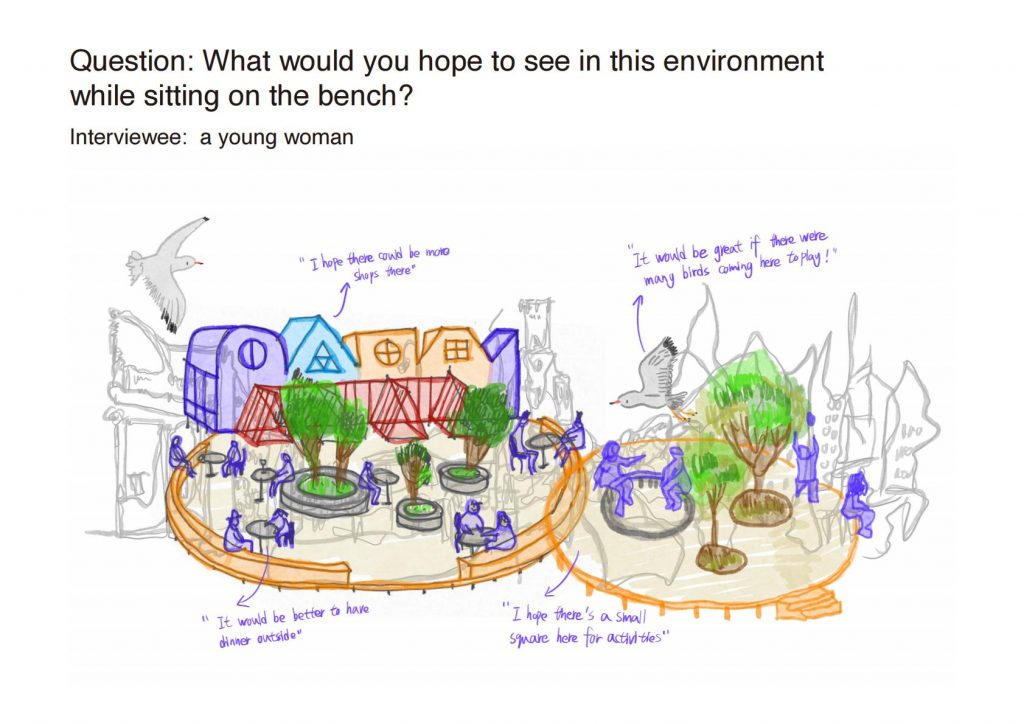
Therefore, I decided to interview the people sitting on the benches to learn more about their feelings and perceptions of this public space. I also used illustrations to record their thoughts and emotions.Through these conversations, I discovered that park bench users express a rich range of emotions toward the space. They interact with the space in multiple ways. These delicate emotional expressions and behavioral reactions gave me a new perspective, helping me better understand the emotional needs and spatial perceptions of each individual in the space of bench.
By observing and illustrating these interactions, I was able to not only demonstrate the physical function of park benches as a space but also reflect on their social function in public spaces. The park bench is no longer just a simple resting place, it is a link for communication between people and space, and between people and society. It carries different social behaviors, cultural identities, and emotional expressions, becoming a bridge connecting individuals to the social environment. This provides new ideas for public space design: the design of park benches and other space elements should not just focus on providing a place to rest, but also consider how to promote social interaction and emotional communication through spatial layout and design.
In conclusion, park benches in public spaces are far more than just physical places for rest; they are carriers of social interaction. Through detailed observation and illustration, we can gain a deeper understanding of the role space plays in facilitating interaction between people and society. (Words: 486)
Reference List:
Perec, G. (1974) Species of Spaces and Other Places. Penguin
Venturi, R., Brown, D. and Izanour, S. (1972) Learning form Las Vegas. The MIT Press
Welcome to myblog.arts. This is your first post. Edit or delete it, then start blogging!